2026-09-02 · Mike Sorensen
Wildfire Smoke and Your HVAC: What Boise Homeowners Should Change
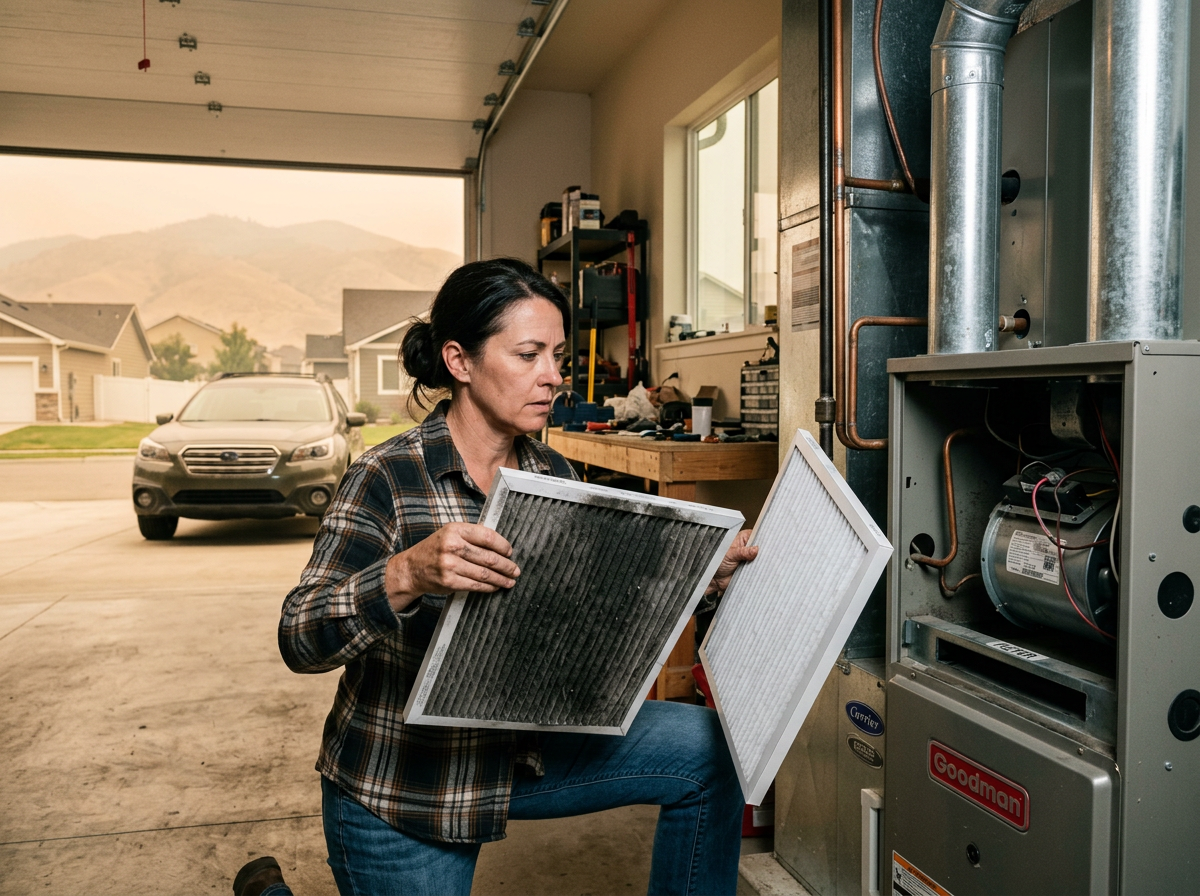
During peak smoke events, change furnace filters every 2–4 weeks instead of the usual 3 months and switch to MERV 13 pleated filters rated for fine particulate. These steps address the heavy ash and soot that settle into Meridian, Kuna and Star tract homes built between 2000 and 2020, where builder-grade 80% furnaces already run longer cycles under winter inversions.
Shortening Filter Replacement Intervals
Treasure Valley wildfire seasons now produce weeks of elevated PM2.5 that standard 3-month filter schedules cannot handle. Homeowners in Meridian and Kuna report filters turning gray within 10–14 days when smoke lingers, forcing the blower motor to work harder against restricted airflow. Switching to a 2–4 week cycle during August through October keeps static pressure within safe limits and prevents the furnace from short-cycling once inversions return in December. Keep a dated log on the furnace door so the next change is never missed. Stock MERV 13 filters sized for your exact return grille; they capture 90% of smoke particles while still allowing adequate airflow through the 80% units common in 2000s tract construction. Pair this schedule with visual checks after any wind event that stirs settled ash from surrounding foothills.
Upgrading to Higher-Efficiency Filtration
Standard 1-inch fiberglass filters offer little defense against wildfire smoke that drifts into North End bungalows and newer Star subdivisions alike. Replacing the filter rack with a 4–5 inch media cabinet allows MERV 13 cartridges that trap particles down to 0.3 microns without the pressure drop that damages older blower motors. In homes with retrofitted ducting, this upgrade also reduces the amount of ash that reaches the heat exchanger, extending the life of the 80% furnace before repair or replacement becomes necessary. Run the blower on continuous low speed only during heavy smoke days, then return to auto to avoid drying the already low 15–20% relative humidity air that accompanies 35–40°F daily swings. Homeowners who made this change last season noted visibly cleaner supply vents and fewer odors when the furnace restarted after inversion periods.
Protecting Ductwork and Return Air Paths
Smoke infiltrates through unsealed joints in the return-air ducts common in 2000s Meridian tract homes. Walk the attic or crawlspace once each fall and seal any visible gaps with mastic rather than tape, focusing on connections near the air handler. In North End bungalows where ducts were added later, check that return grilles sit at least 12 inches off the floor so they pull less settled ash. During prolonged smoke events, close bedroom doors at night and run only the main-zone fan to limit the volume of outside air pulled through leaky envelopes. These steps complement the filter changes already described and keep the furnace from ingesting extra particulate that accelerates wear on the blower wheel and heat exchanger.
Practical Takeaway
Track local air-quality alerts and shorten filter changes to every 2–4 weeks with MERV 13 media while smoke persists; inspect and seal return ducts each fall. These two changes directly protect Boise furnaces from the specific smoke loads and inversion cycles of the Treasure Valley.